
Gender studies leaders from the Global South join CIGS anniversary event
Doing Gender Studies: A Global (South) Conversation
Thursday 19 November 2026 at 2pm UK time (4pm South Africa, 11am Chile, 10am Trinidad and Tobago).
Join the conversation: Register
Leaders of gender studies centres and research from Trinidad and Tobago, South Africa and Chile will join the Centre for Interdisciplinary Gender Studies (CIGS) online on 19 November to discuss the future of the field across the Global South.
is part of the CIGS 30th anniversary Critical Futures Series, Gender Studies for Uncertain Times.
A conversation across contexts
Speakers will reflect on the opportunities, challenges and future directions of gender studies in their own contexts. They will also explore what these perspectives can contribute to debates about the future of gender research, politics and academia in the UK and globally.
Each speaker leads gender studies research or a gender studies centre at their own university, offering a view of how the field is being built, taught and sustained outside the Global North.
The conversation is facilitated by Dr Lata Narayanaswamy, Associate Professor in the Politics of Global Development in the University’s School of Politics and International Studies (POLIS). Her research brings critical decolonial feminist insights to applied, interdisciplinary work on climate change, water security, anti-gender movements and development practice.
Meet the speakers
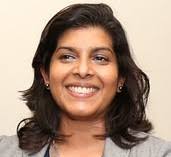 Dr Shelene Gomes is a sociocultural anthropologist at The University of the West Indies, St Augustine campus, Trinidad and Tobago, and an Honorary Research Associate at the University of Cape Town. Her research explores social reproduction and migration within the Caribbean care economy. She is the author of Cosmopolitanism from the Global South (Palgrave Macmillan, 2021) and co-editor of Race, Class, and Nationalism in the Twenty-First-Century Caribbean (University of Georgia Press, 2024). She leads Ageing Infrastructure in Trinidad and Tobago, a community-based study into decent housing for older people. Her work with transnational families has been included in T20 G20 policy briefs.
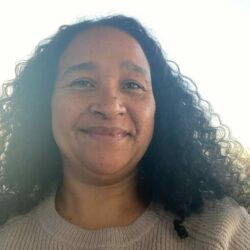 Dr Benita Moolman is an Associate Professor at the University of Cape Town, where she is Head of the African Feminist Studies Department and Director of the African Gender Institute. She teaches African feminist theories and activisms, and African post and decolonial feminist theory. Her research focuses on ending sexual and gender-based violence, masculinities, social movements against violence against women, and narrative methodologies. She has previously worked at Rape Crisis Cape Town.
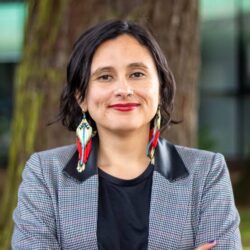 Dr Natalia Cárdenas Marín is Director of the Centre for Gender Studies (CEG-UCT) at Universidad Católica de Temuco, Chile. A lawyer from Universidad del Rosario, Colombia, she specialises in human rights and constitutional law and holds a PhD in Intercultural Studies from Universidad Católica de Temuco. Her research covers gender, migration, international human rights law and legal feminisms.
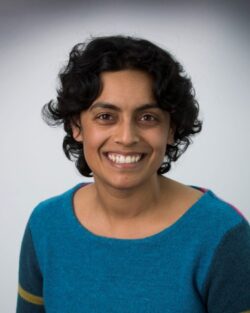 (Panel Facilitator) Dr Lata Narayanaswamy is Associate Professor in the Politics of Global Development, School of Politics and International Studies (POLIS), University of Leeds, UK. Since 2001 Dr. Narayanaswamy has worked as a research practitioner, consultant and now an academic working at the nexus between development theory and practice. Her research and writing critically reflects on gendered/intersectional and post/decolonial dynamics of development knowledge and its perceived contribution to addressing global development challenges. She brings critical decolonial feminist insights into applied, interdisciplinary research on a range of issues including climate change, water security, anti-gender movements and development practice.
Thirty years of interdisciplinary gender studies
The Critical Futures Series marks 30 years of CIGS at the University of Leeds. The series asks what gender studies can offer, and what it needs, at a time of political and social uncertainty. This event puts scholars working in the Global South at the centre of that question.